

DESIGN

Objetos de la Clase
Artifact Set 1: 4-minute recordings on various subjects
Creating recordings about various subjects was adaunting task, but my improvement is heard when comparing the first and last
recording (samples at left). In the first recording, I describe my interest and opinion of video games. You can hear that I pause quite often and use familiar and simple indicative tenses. In the last recording where I describe the mysteries of love, the pauses are less frequent, and content more complex in word choice, structure, tense, etc.This last recording, prompted conversations with friends and family about cultural differences related to love between American and Latin culture. For instance, my friend from Costa Rica would never consider questioning her husband, but it is a very common occurrence in American culture.
My recording on globalization and the impact of multinational corporations made me realize how much more complex and in-depth this class was than previous Spanish classes. My son, who is fluent in Spanish, was very surprised we were tackling this type of subject matter.
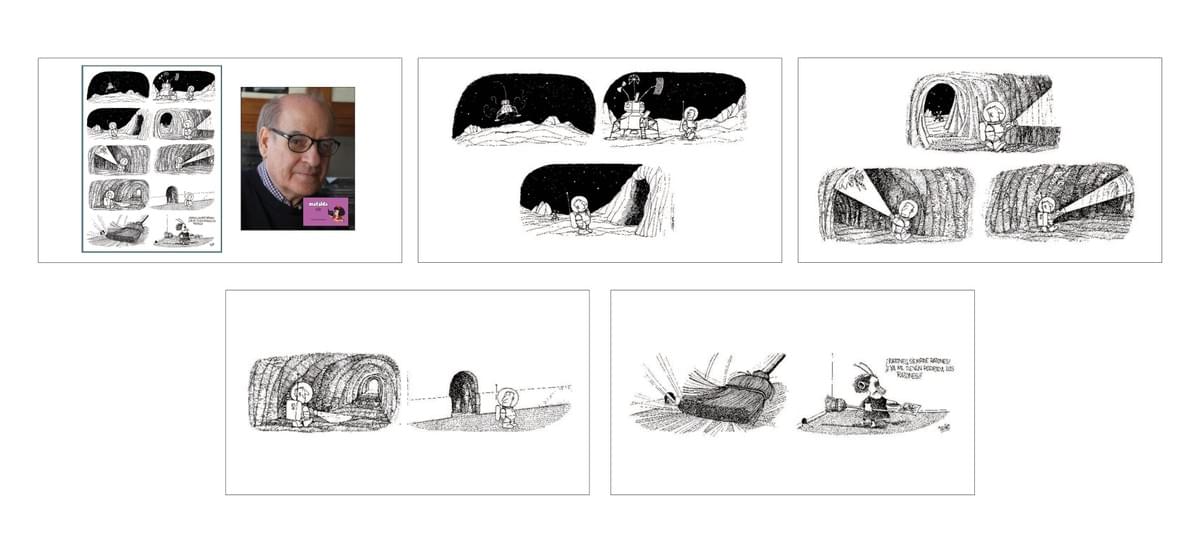
Artifact Set 2: Comic strip presentations without notes or text prompts
Giving two presentations in Spanish without notes or text prompts was even more challenging, and very much outside my comfort zone. It pushed me to think spontaneously in Spanish, rather than just read the slides, and pushed me to overcome my fear of making mistakes in front of others. In both presentations, Viaje a Marte and Facultad de Periodismo Moderno (samples at left), I used isolated elements and color cues to organize my thoughts and remind me to just describe three points in each image.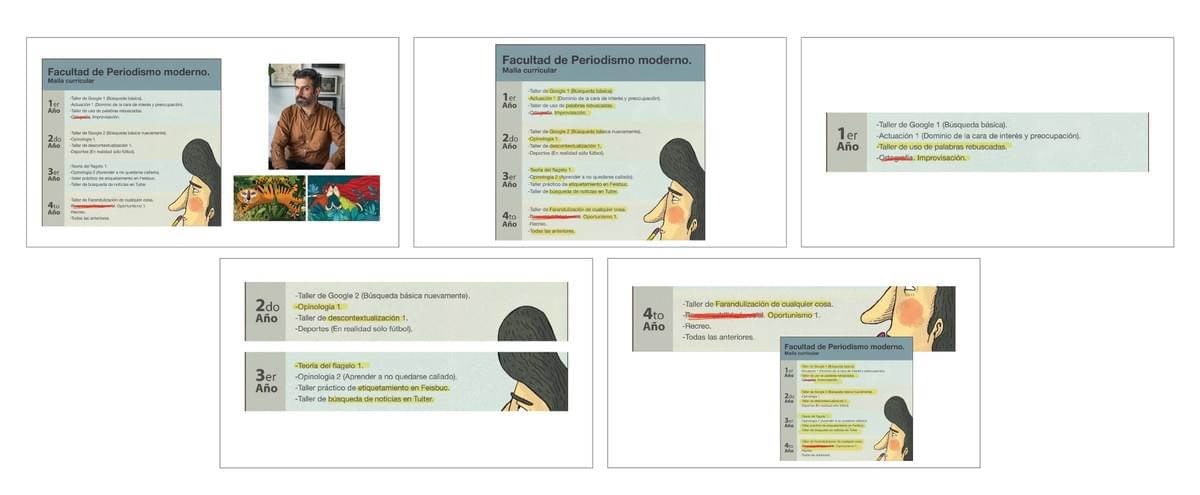
This strategy helped to manage performance anxiety, and while I don’t have video of those presentations, I do recall that the Professor and some classmates said there was a lot of improvement between the two. I felt more comfortable, the flow was better, and I realized when practicing, that there are many ways to say the same thing and I could describe something with the words I know. My confidence increased dramatically in the second presentation, and I was amazed at the sense of surprise and accomplishment I felt afterward. These skills translate very well into future endeavors: presentations, teaching, business meetings, diplomatic missions and/or impromptu conversations with others in English or Spanish.
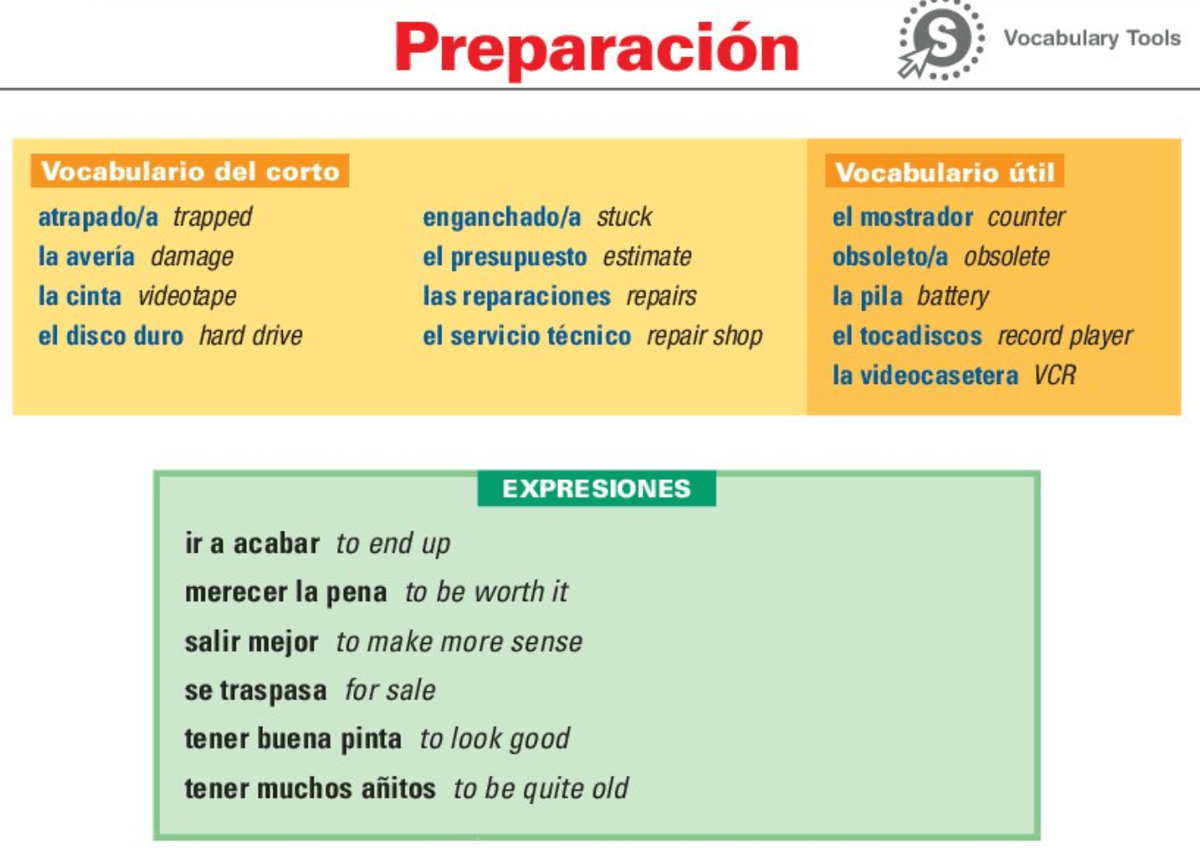
Artifact Set 3: Textbook coursework, homework, and supplemental materials
The textbook coursework, homework, and supplemental material did a great job of solidifying various concepts such as vocabulary, sentence structure, grammar, verb conjugations, tenses, etc. While the textbook covered the basics, the associated homework assignments and supplemental material helped. I did struggle with the fact that all the material was in Spanish, but the repetition of message, and visual nature of some of the material really helped fill in the gaps. I did appreciate that some activities allowed multiple attempts to revise thinking and find the correct answer.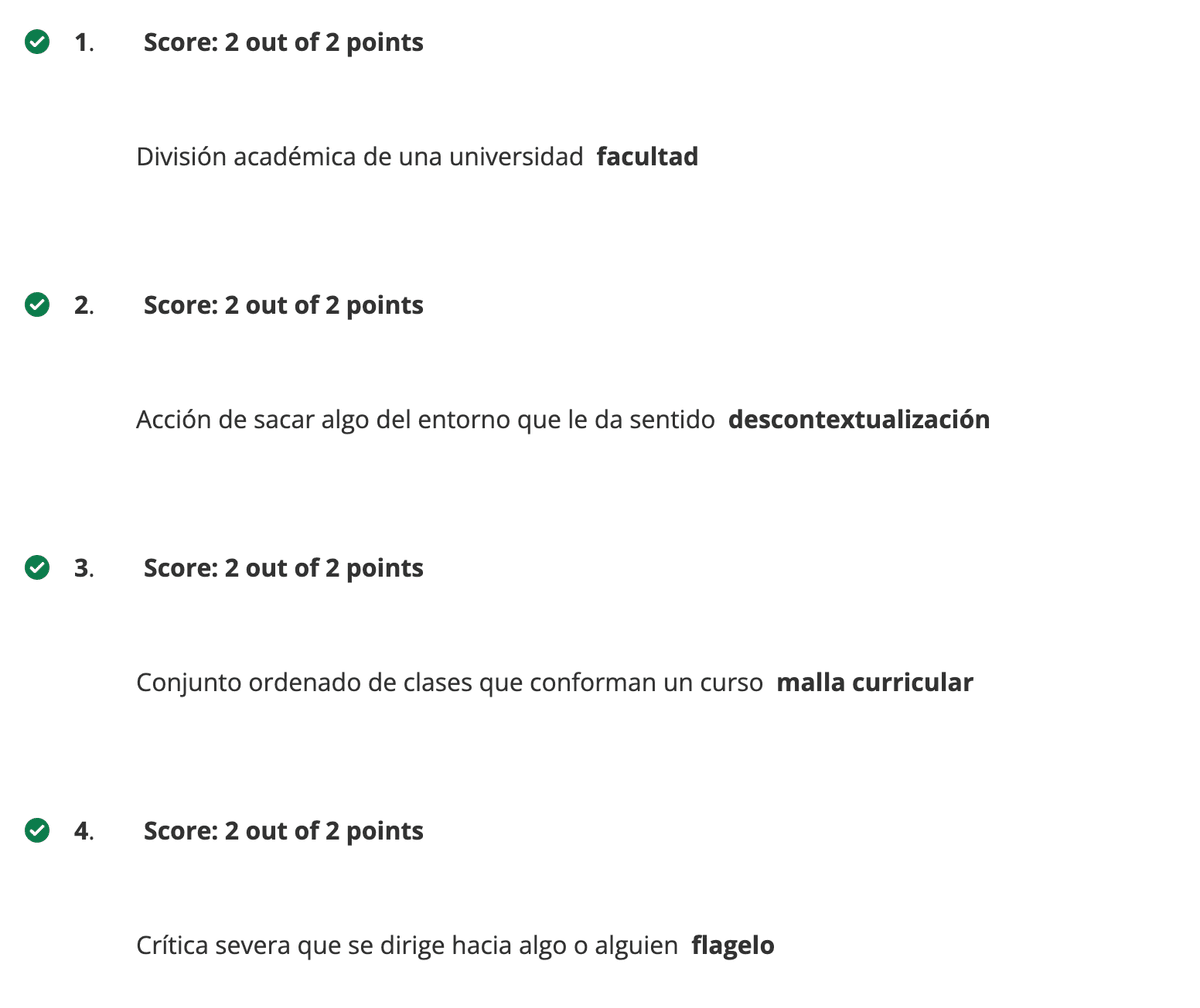
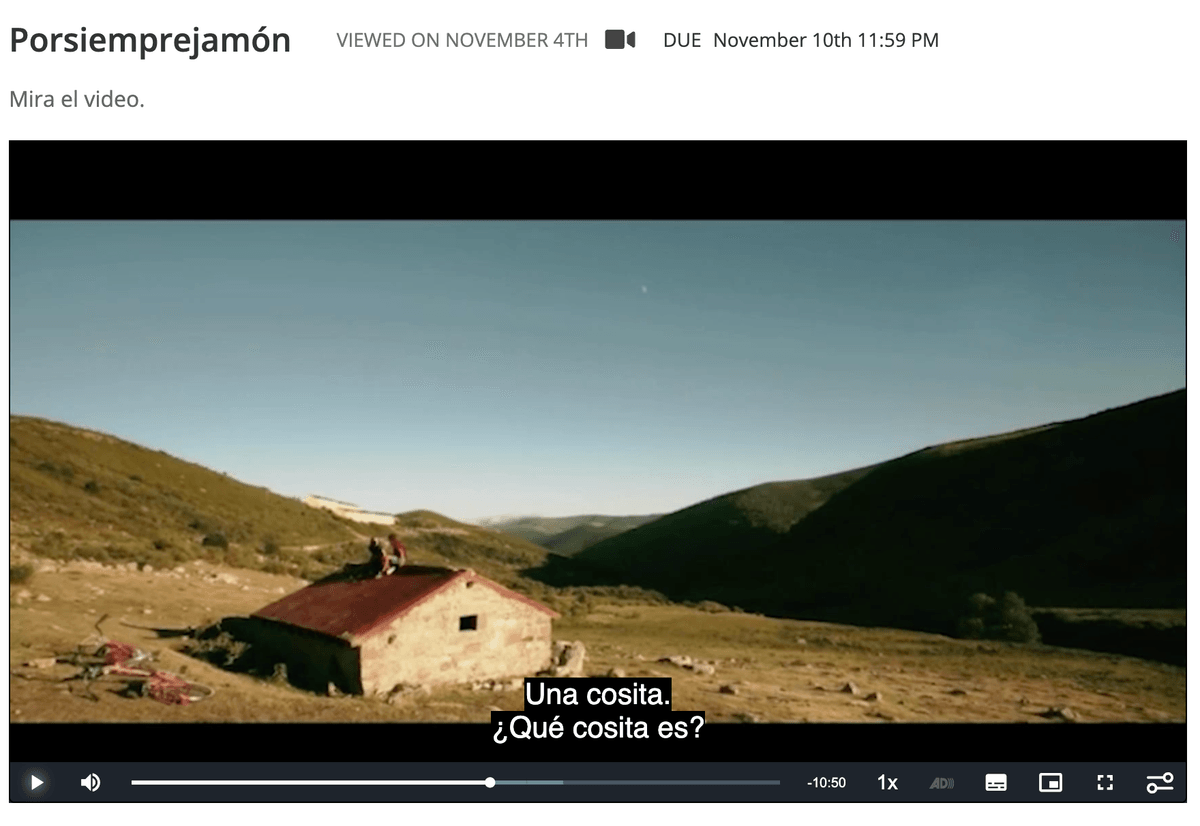
Each chapter included a short film and comic strip to analyze, which was a fun and challenging way to learn about language and culture. Even though I watched the films with subtitles, I still had a hard time understanding what was happening and had to pause and rewind repeatedly to look up word definitions. Class discussions helped explain what I missed and toward the end of the semester, I understood enough to take part. PorSiempreJamón was a favorite, because of the temporal juxtaposition between youth and adulthood.
The same was true for the comic strips: they introduced cultural subject matter that prompted thought and discussion — like the different perspectives between the grandpa and the boy in Viaje a Marte, and later, as the boy grew to be a man. The Facultad de Periodismo Moderno comic strip highlighted generational differences by showing how modern journalism relies too heavily on emotion and celebrity.
Conexiones Culturales y Conclusiones

Discussions about cultural differences continued throughout the class, which was very interesting. For example, when reviewing short films such as Diez Minutos or Forastero, we compared pace and emphasis to American films which focus on action rather than relationships. We also discussed other genres such as telenovelas and reality TV and these discussions led to others about art, food, fashion, and everyday life.
One extracurricular activity I took part in, was to provide translation services for the ODU School of Dental Hygiene’s free clinic for the Hispanic community. While I had good intentions and thought it would be very cool to help out in that way, I quickly realized that I could only observe. However, it was a very interesting experience and it underscored one reason to learn Spanish. The road is long, and while I'm just beginnning, this class has pushed me closer and taught me valuable lessons that translate to other areas in my life. I look forward to the road ahead.
